Healthcare environments need to work for four generations
Architect Edwina Bennett makes the case for designing health and caring environments to support difference, not uniformity
Population ageing is accelerating more quickly than our built environment and institutional systems are adapting. According to the United Nations, by 2050, one in six people globally will be aged 65 or older.
In Australia, this shift is accelerating. Australian Bureau of Statistics data tells us that by 2040, the population aged over 75 is expected to grow by 64 per cent, adding more than 1.7 million Australians to this cohort.
On average, Australian healthcare buildings, including hospitals, retirement villages, aged care and regional care facilities, were built around 40 years ago. While they have served multiple generations, they reflect the care models and social assumptions of their time.
The result is a growing misalignment between the way people live and age, and the environments designed to support them. We continue to design as if health and life unfold in neat, sequential stages, rather than acknowledging that multiple generations – with fundamentally different expectations of care – coexist at the same time.
New healthcare environments must be designed for long-term relevance. This is not simply a question of flexibility over time, but of designing places capable of supporting multiple models of care simultaneously. Any health facility designed today must serve Gen X, Millennials, Gen Z and Gen Alpha at the same time, a universal system, but not a uniform one.
The real risk is not an ageing population, but health environments that assume sameness, stability and linear change in a world defined by difference.
Rethinking where care happens
Designing for an ageing population is not only a health issue, but a housing and planning challenge. When care cannot be delivered within the community, pressure shifts to hospitals, where older people often remain long after they are medically ready to leave.
Across Australia, this failure is increasingly visible in hospital bed blocking. At any given time, around 2,500 to 3,000 older patients are medically fit for discharge time but remain in public hospital beds due to a lack of availability of appropriate aged care, housing or community based‑support.
These numbers represent close to one in 10 hospital beds nationwide. This reduces hospital capacity and delays care for others, not because of clinical constraint but because the surrounding systems of housing, care and community are not designed to work together.
Too often, care and housing are planned for a single cohort and a narrow moment in life. Yet, health systems operate in conditions of demographic overlap, where generations do not replace one another but accumulate.
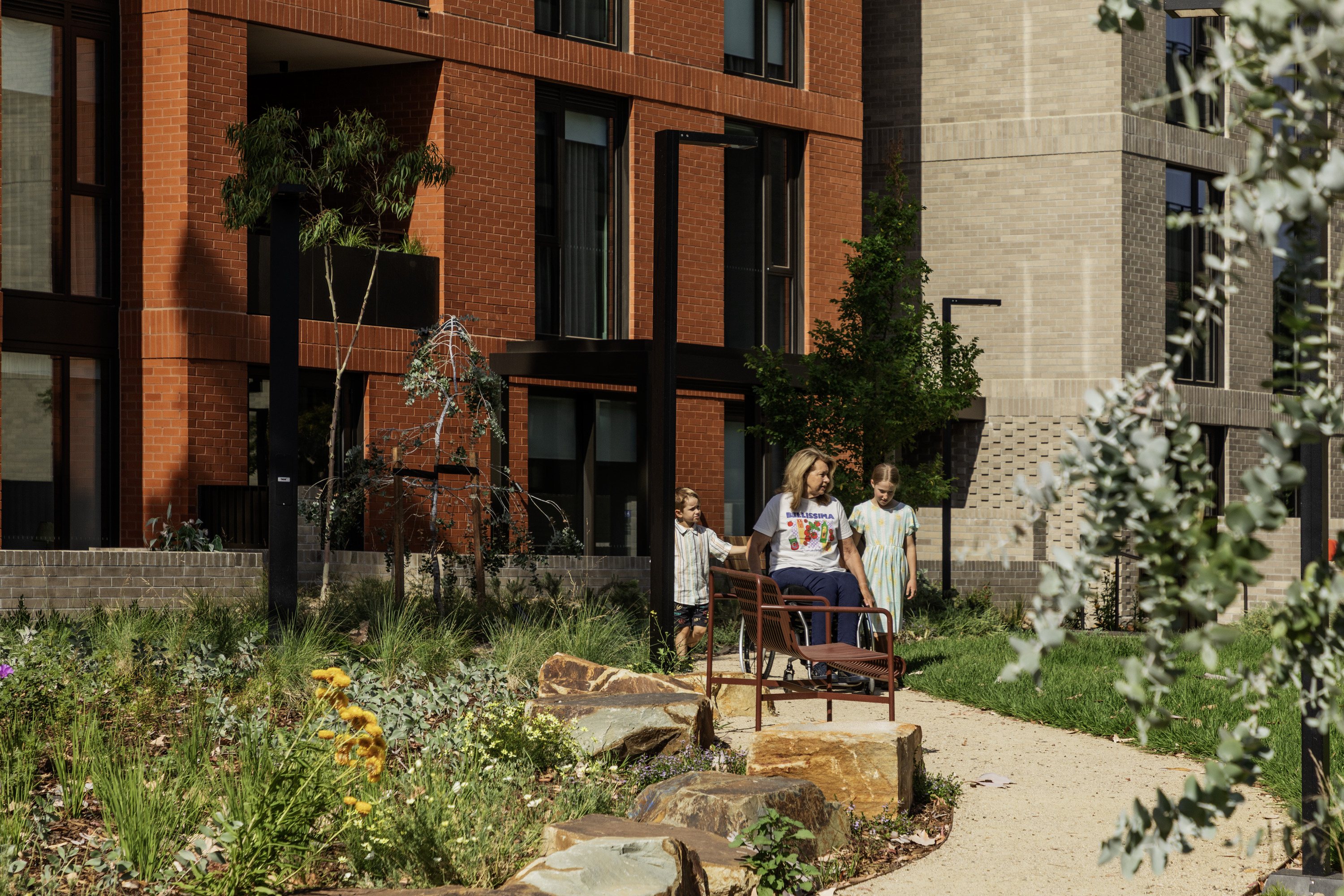
As long-life assets, caring environments must therefore be conceived as intergenerational ecosystems, environments that support fundamentally different relationships to health, care, autonomy and trust, at the same time.
A pluralist approach: designing for difference
Addressing this misalignment requires a serious shift in how aged care and retirement living environments are conceived and built.
Rather than designing for a single moment, cohort or model of care, facilities must be designed to accommodate multiple facets of care at the same time.
A ‘pluralist approach’ requires care environments to be conceived as long‑term ecosystems. They need to be able to support overlapping generations, accelerating technology, evolving care models and different expectations of health at the same time, without assuming that a single setting or solution can meet every need equally.
- For time poor Gen Xers, health is pragmatic. Often supporting both ageing parents and children, this generation requires health systems that operate as part of a broader ecosystem. Care environments must therefore be efficient, integrated and outcome-oriented, responding to lives shaped by work and layered caring responsibilities.
- For Millennials, health is deeply connected to identity, values and lifestyle. Personalisation, choice and alignment with social and environmental values shape how care is accessed and trusted.
- For Gen Z, mental health is central rather than secondary. Trust is built through transparency, cultural alignment and community, with strong expectations around inclusion and psychological safety.
- Gen Alpha is the first generation born entirely into an AI-enabled world where the relationship to health will be fundamentally reshaped. Technology will be embedded and assumed, but human, legible and emotionally intelligent environments will remain essential.
These generations are not future users replacing past ones. They are concurrent users whose expectations overlap, conflict and coexist.
Beyond adaptation: designing multiple systems at once
Health environments are often described as needing to adapt over time. But adaptation assumes a stable norm with incremental change at the edges.
In reality, health systems today must operate as many systems at once, including workplaces, community hubs, homes, digital interfaces and places of care, respite and treatment, each approached and valued differently by different generations.
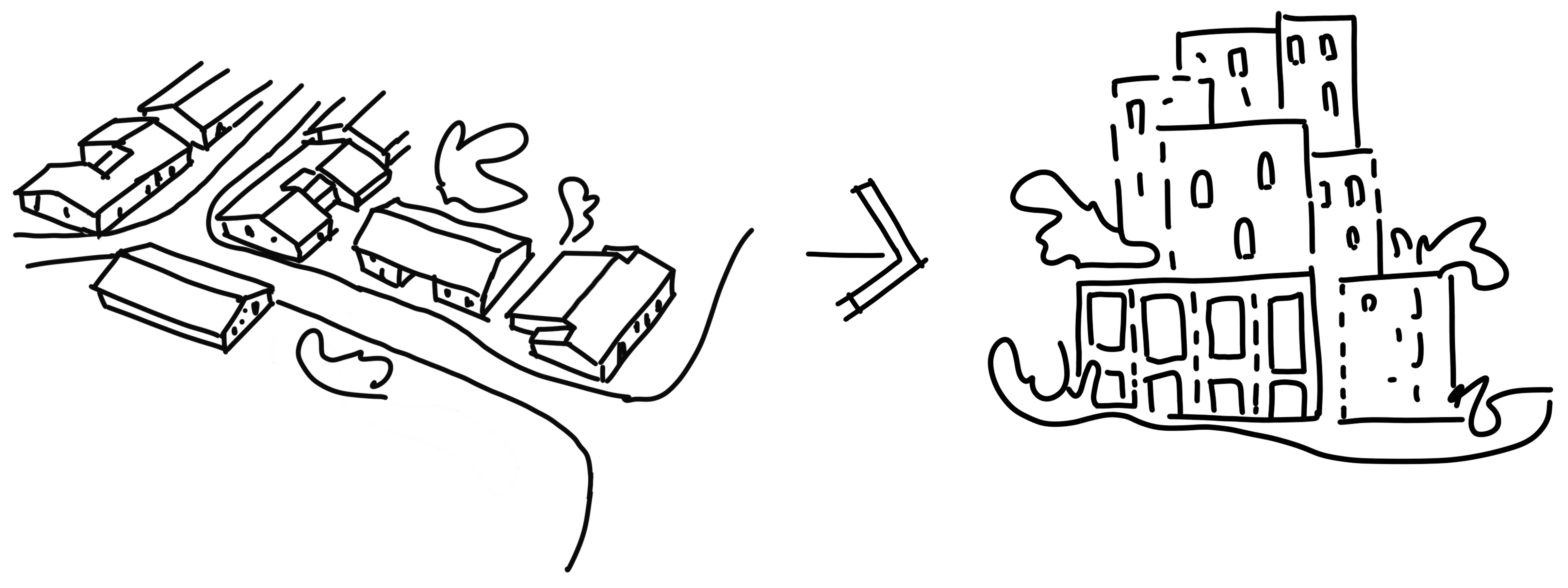
Health facilities that succeed are those capable of layering care within familiar, community-based settings, rather than separating treatment, living and support. Design decisions made early determine whether a building can support difference without displacement.
As Gen X moves into older age and with Millennials following, the question is no longer whether care can be delivered, but whether it can be integrated without requiring people to disconnect from their community, identity or sense of belonging. Supporting ageing in place becomes a measure not just of clinical success, but of social sustainability.
Designing the model of care
Research consistently shows that people living in well‑designed, care‑integrated communities are more socially and physically active, experience lower rates of hospitalisation and report stronger wellbeing.
These environments ease pressure on acute care not through intervention, but through everyday connection and support.
Designing health environments for multiple generations therefore demands a broader view of care. Successful places integrate higher-acuity services alongside spaces that foster independence, dignity and belonging, allowing care to scale and coexist rather than replace.
Technology will continue to shape how care is delivered, but it cannot resolve questions of values, trust or humanity. These are spatial and organisational choices, set from the brief.
The ambition must be to put living first, to design health and care environments that are genuinely desirable places to be and capable of supporting many definitions of health at once.
Preventative, restorative and community-focused models reduce reliance on traditional treatment spaces over time, not by removing them, but by situating them within richer ecosystems of care.
Clients, governments and designers must be ambitious. Designing for the generations ahead means moving beyond uniform solutions towards environments that can hold difference – universal in access, but plural in form, experience and meaning.
Edwina Bennett is Principal and Global Sector Leader – Health at Woods Bagot in Adelaide.
Email: rebecca.cox@news.com.au