Residential care bed growth stalls as demand continues to soar
Analysis by aged care provider Bolton Clarke suggests broader policy changes are needed to provide new homes across more diverse locations

Australia's residential aged care sector is facing a deepening crisis as data has revealed bed growth is rapidly outpaced by soaring demand.
An analysis by not-for-profit aged care provider Bolton Clarke, following the release of the 2025 Aged Care Service List, reveals a system struggling to accommodate the nation's growing older population, leading to significant pressure on existing services and staff.
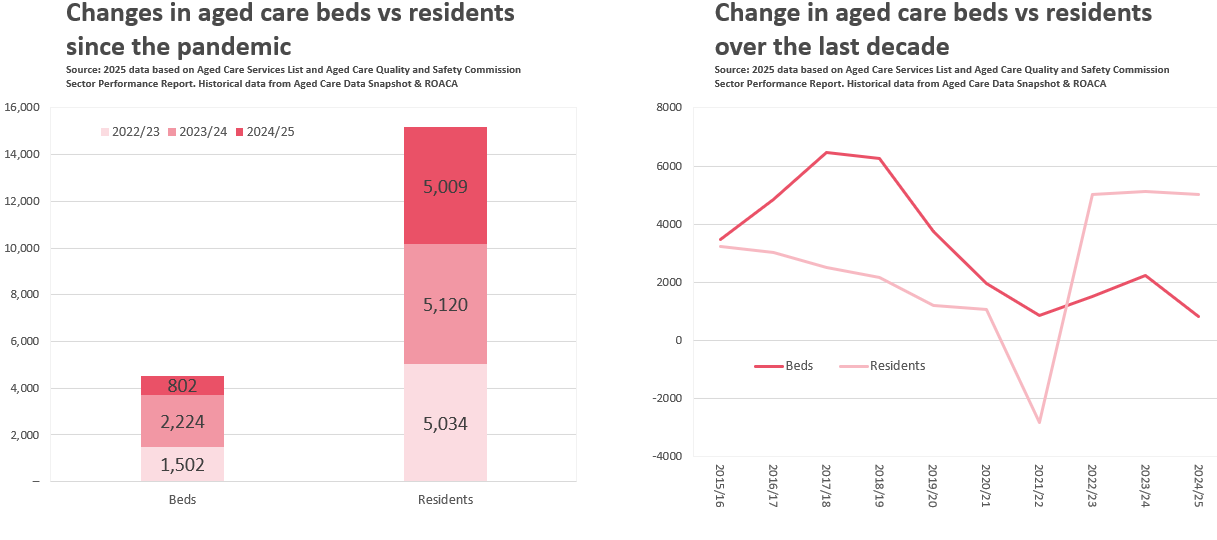
The provider's analysis shows that for the 2024-25 financial year, the number of aged care residents increased by approximately 5000, yet total bed growth was a mere 800, representing a 60 per cent reduction in new bed growth compared to the previous year, falling dramatically short of current needs.
This disparity is particularly concerning amidst ongoing debate surrounding long waitlists for older people seeking in-home care services or discharge from hospital into residential care.
Bolton Clarke executive general manager, and analysis author, Tim Hicks, said bed availability often does not match areas of actual demand, creating localised shortages despite national figures.
“While government figures showed around 21,000 vacant beds nationally, our view is that a significant proportion of these were not actual vacancies, with bed numbers reduced through factors such as renovation and transformation of shared rooms into single accommodation aligned with changing resident preferences,” he said.
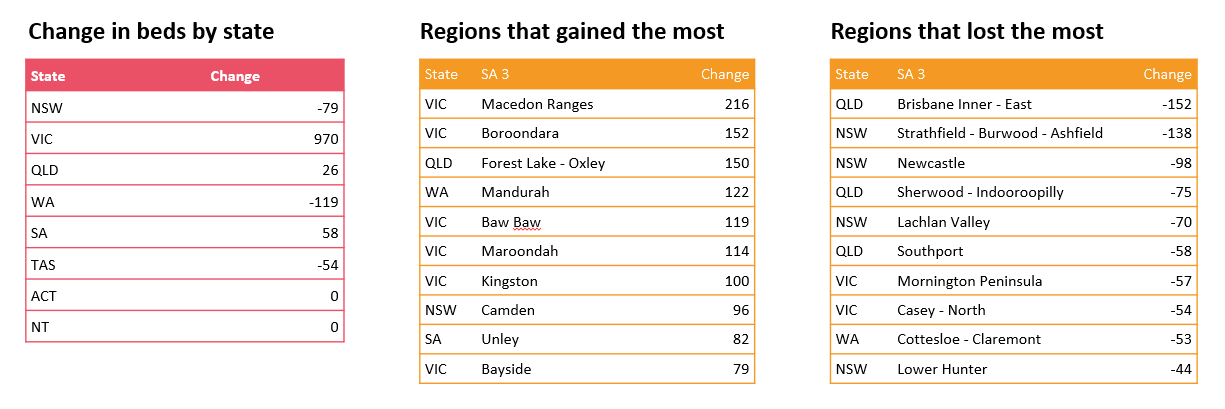
In 2024-25, Victoria saw the largest net gain of 970 new beds, while Western Australia experienced the biggest reduction, losing 119 aged care beds. New South Wales and Tasmania also faced overall losses of 79 and 54 beds respectively.
Regionally, areas like Brisbane’s inner east (-152 beds), the Strathfield-Burwood-Ashfield area in NSW (-138 beds), and Newcastle (-98 beds) were among the hardest hit, indicating a critical mismatch between where beds are needed and where they are available.
Funding models and policy roadblocks
The Bolton Clarke analysis examines the underlying policy and funding challenges contributing to ongoing bed shortages, pointing out that while federal government funding for aged care has increased significantly since the Royal Commission, much of this investment has focused on workforce and home care, rather than incentivising new residential builds.
New funding changes brought in by the new Aged Care Act will support increased revenue from accommodation in wealthier areas, however, Mr Hicks suggested broader policy changes to provide new homes across more diverse locations.
“Policy needs to fix the supplement for supported residents and factor in a reasonable margin for care and hotel services, or the business case for building residential care over retirement living will continue to fall short,” he said.
Without these changes, the analysis says, providers will continue to find it more attractive to invest in retirement living rather than residential aged care, further compounding the bed shortage.
“Departmental projections suggested there would be almost 9000 residents in 2024-25, rising over the next decade to an additional 11,000 residents per year,” Mr Hicks said.
“Demand is growing, but between 5500 and 7000 additional residents per year seems like a more reasonable projection over the four-year Commonwealth budget forward estimates.
“To the extent that the budget forecasts reflect this overstatement of future demand, there may be funding that could be directed to support construction of new beds and meet the immediate undersupply that is already affecting older people across Australia.”
Email: rebecca.cox@news.com.au