Thousands stuck in public hospital beds amid nationwide aged care shortage
Queensland is carrying the heaviest load with patients stranded in its hospitals costing $912m a year

Thousands of Australians are languishing in public hospitals for up to a year despite being medically fit for discharge due to a nationwide aged-care and disability placement bed shortage.
It comes as News Corp launches a new campaign, Sick of Waiting, aimed at shedding light on the crisis.
New figures reveal 3,704 long-stay patients are currently stranded in state-run hospitals while waiting for aged-care beds or NDIS-supported accommodation, a crisis now draining more than $2.34bn a year from state health budgets.
Premiers say the costs created by these blocked beds, ranging anywhere from $194,000 a day in Tasmania to $2.5m a day in Queensland, has pushed hospital systems to breaking point.
Queensland is carrying the heaviest load, with 1,126 patients stranded in its hospitals at a cost of $912m a year, followed closely by NSW with 1,166 patients costing around $438m annually.
Of the 1,126 Queenslanders awaiting a suitable aged-care or NDIS-supported accommodation, 289 are classed as young patients.
This younger cohort, people under 65, or under 50 for Indigenous patients, are stuck for an average stay of 298 days.
Almost 90 per cent are NDIS-eligible, and 60 per cent have an NDIS-related diagnosis.
A further 14 per cent have primary mental-health diagnoses.
But it is older Queenslanders who make up the bulk of the crisis, with 837 elderly patients remaining in hospital despite being fit for discharge, and an additional 486 placed in temporary beds at health facilities across the state.
A total 629 people, or 75 per cent, have been waiting in hospital for aged-care placements and 482 remain stuck in interim care waiting for beds to open up.
The number of delayed discharges for older people has more than doubled since 2020, with their average stay now 112 days.
Long-stay patients cost Queensland more than $2.5m per day, with each bed occupied at roughly $2,300 per patient, per day.
Older patients alone account for $1.91m in taxpayer money daily, which is absorbed by hospitals rather than flowing into frontline care.
National aged-care occupancy is now at 94.4 per cent, with full capacity expected to be reached within three years, and an 18,000-bed annual shortfall forecast by 2030.
National analysis released by Boxwell and Co this week shows Australia added just 578 aged-care beds last year – barely five per cent of the 10,600 needed annually.
NSW, WA and Tasmania went backwards, while Queensland added only 26 beds.
Premiers across the country have now united to fight for more funding to combat growing hospital pressures as a result of failed aged care and NDIS services.
The leaders have accused Canberra of abandoning the 42.5 per cent shared hospital-funding agreement reached in 2023, after the Commonwealth offered a contribution closer to 35 per cent.
Premiers have warned that unless both funding and placement pipelines improve, hospital ramping, surgery delays and chronic overcrowding will worsen.
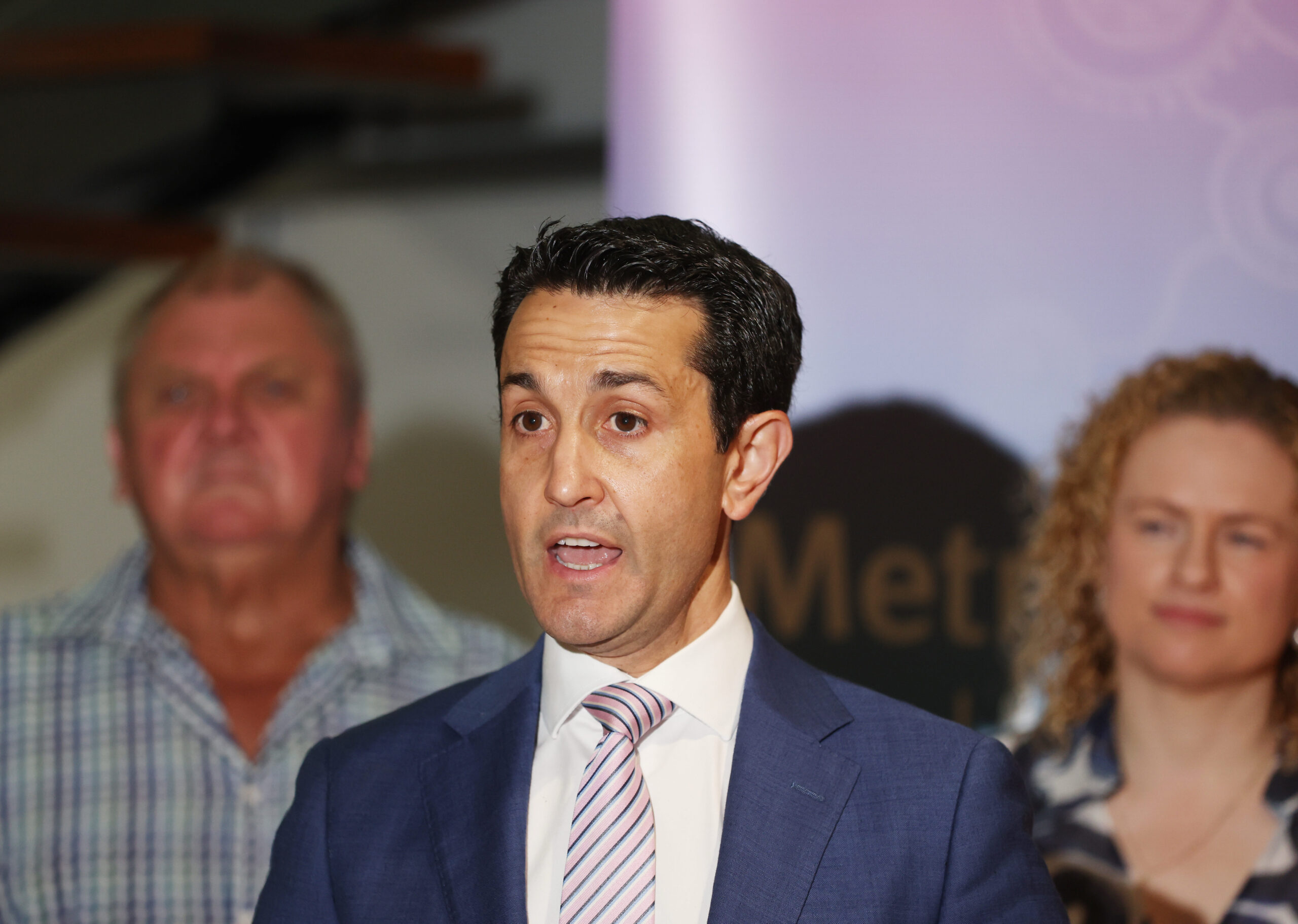
Picture: NCA Newswire/Annette Dew.
Premier David Crisafulli, who last week called out Prime Minister Anthony Albanese for shifting federal responsibilities onto states, urged the Commonwealth to work with all jurisdictions to find a national solution to the crisis.
“Across the map of Australia, north and south, east and west, red and blue, state and territory government’s are doing their best to help the stranded Australians and we’ve got to chart a new course for the sake of our nation,” he said.
“This is a critical moment for our nation’s health system and we are absolutely going to drive a solution here because all Australians are depending on it.
“The states are stepping up to deliver the things we are responsible for, but we can’t keep absorbing the buck passing or failures of the federal government.
“It’s time for the federal government to take responsibility and rescue the stranded Australians from our hospitals.”
The federal government says it is increasing funding by 12 per cent next year and insists aged-care and NDIS reform will proceed alongside hospital negotiations.
A spokeswoman said the Commonwealth did not want Australians spending longer in hospital than necessary and was negotiating in “good faith” to finalise the 2023 hospital funding agreement.
“We’ll continue to target critical shortages and bridge capital gaps, but government grants alone were never intended to solve the problems we face and can’t deliver at the scale required,” she said.
Brisbane geriatrician Dr Lucy Dakin, who specialises in elderly care, says short term solutions – like funding interim care partnerships with private hospitals – are needed now.
She said the sector had underestimated both the demand for dementia care and the surge in cases following Covid, which left many older Australians isolated for long periods.
Dr Dakin’s patients have been left waiting in hospital for months, some for nearly a year, because there is simply nowhere to send them.
“There is a risk of deteriorating when they stay a long time and that’s really hard to watch,” she said.
“There’s also risk of infection being in a hospital setting and its not good for their mental health.
“For me and my team it’s a challenge to keep them as physically and emotionally well as we can.”
Dr Dakin said dementia patients and those with complex behaviour are the hardest to place and patients who have the money upfront to pay for nursing homes often get placed over government funded patients.
“It’s heartbreaking. This is a person; it could be your grandpa or my grandma,” she said.
The government has appointed Nigel Ray PSM and UTS Associate Professor Nicole Sutton to conduct an independent review of residential aged care accommodation funding and pricing, with a final report due by July 1, 2026.
Originally published as Thousands of Aussies languishing in public hospital beds amid nationwide aged care shortage
Email: rebecca.cox@news.com.au