New framework to improve Australians’ health decision-making
It comes as policymakers grapple with the challenge of helping Australians distinguish trustworthy health information from misinformation online
Australians are being encouraged to become more confident navigating health information under a new national framework aimed at tackling one of the less visible drivers of poor health outcomes: health literacy.
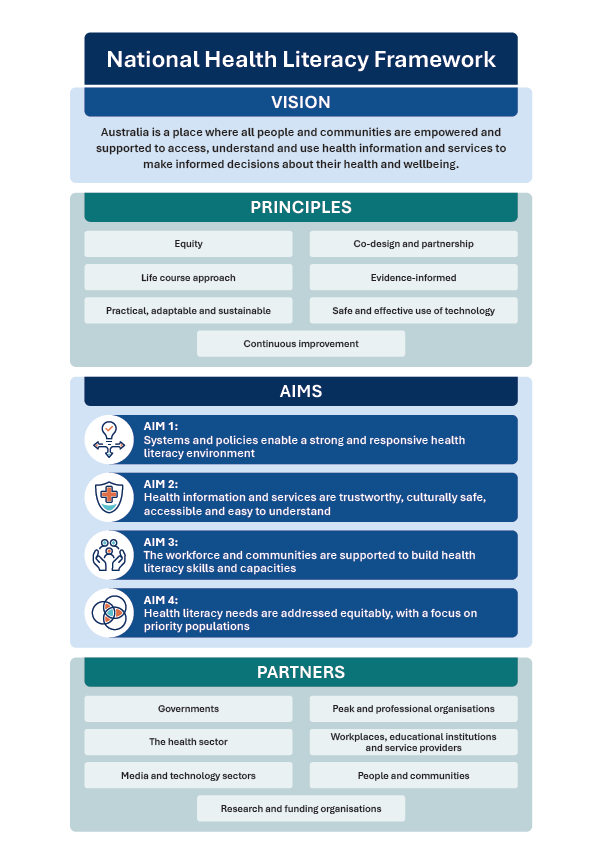
Launched at the University of Sydney, the National Health Literacy Framework is the first coordinated national effort to improve how people access, understand and use health information. Rather than focusing only on individuals, the framework also calls on governments, health services and community organisations to make health systems easier to navigate and health information easier to understand.
Assistant Minister for Health and Ageing Rebecca White said improving health literacy was increasingly important as Australians encounter growing volumes of health information online.
“Health literacy gives people the confidence to understand their health and make informed decisions about their care,” she said.
“With more health information at our fingertips than ever before, particularly through social media and AI, knowing what information you can trust really matters.”
The framework was developed by the Sax Institute and the University of Sydney’s Health Literacy Lab as part of the National Preventive Health Strategy 2021–2030.
The move comes as policymakers grapple with the challenge of helping Australians distinguish trustworthy health information from misinformation circulating online. According to the framework, improving health literacy has the potential to reduce delayed care, medication errors, avoidable hospitalisations and poor chronic disease management. The framework estimates that a 25 per cent improvement in health literacy could save Australia $7.3 billion each year.
University of Sydney Health Literacy Lab director Professor Kirsten McCaffery said the challenge extends beyond simply providing information.
“Health literacy isn’t just about understanding information. It’s about knowing where to find information and who to trust,” she said.
“There is a lot of useful health guidance available online and on social media, but there is also much that is misleading, false or linked to influencers with vested financial interests.”
A key focus of the framework is ensuring health information is accessible and culturally appropriate for communities that may face additional barriers when using health services, including First Nations and multicultural communities.
Community panel chair Saad Khalid said many people still struggle to locate reliable information and services.
“For many communities, especially migrant and multicultural communities like mine, it can be hard to know where to go for the right information,” he said.
“Making sure that information and services are easy to find, understand and use will help people navigate the health system more easily and access the best possible guidance.”
The framework will now serve as a guide for future policies and programs designed to improve health literacy across Australia, with the broader goal of helping people make more informed decisions about their health and care.
Email: rebecca.cox@news.com.au