Inspector-General warns aged care reforms ‘causing harm’
Natalie Siegel-Brown said the government is ‘fighting the wrong battle’ by focusing on demand rather than prevention
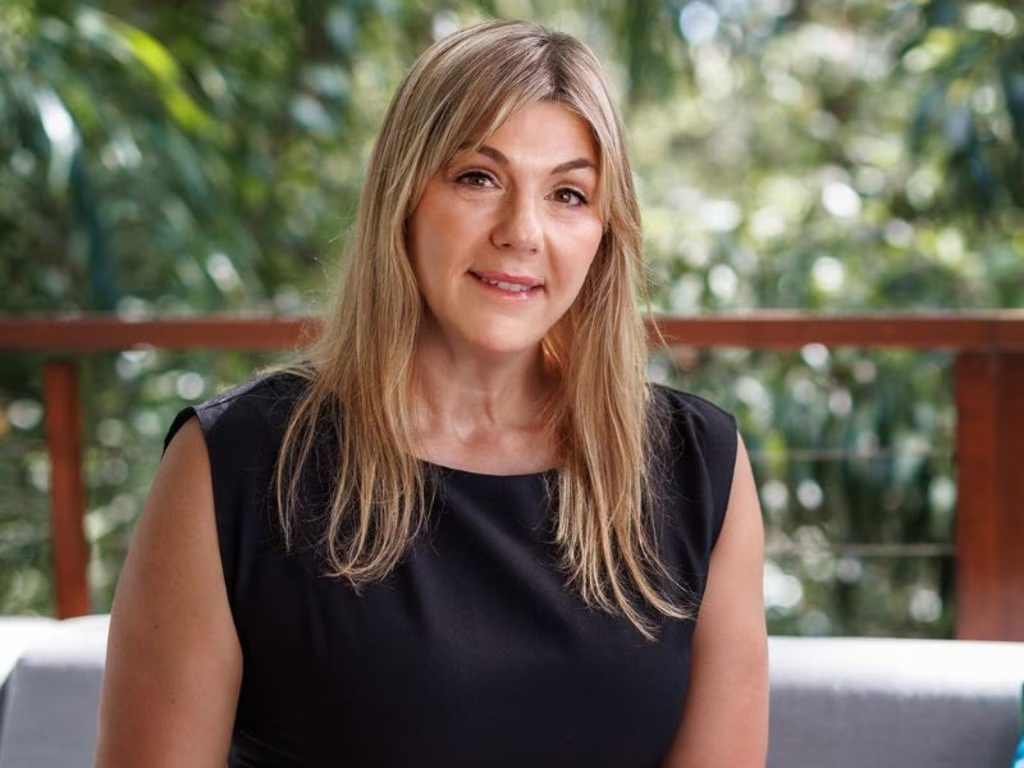
Aged Care Inspector-General Natalie Siegel-Brown has delivered a warning about the implementation of Australia’s aged care reforms, arguing that long wait times, complexity and financial barriers are harming older Australians while driving up long-term costs.
Addressing the National Press Club on Wednesday, Ms Siegel-Brown said the ambitions of the new Aged Care Act were in danger of being undermined by the way reforms are being delivered.
“But a promise on paper is not the same as a promise realised,” she said.
“As Inspector-General of Aged Care, I cannot see how our system is geared to deliver that promise. And in some cases, I would go further.
“The way aged care reform is being implemented is causing harm.”
Ms Siegel-Brown said the aged care debate had become focused on managing rising demand rather than preventing it in the first place.
“We’ve misconceived the problem. And so from where I sit, we’re fighting the wrong battle,” she said.
“The new Aged Care Act actually demands we confront a different question altogether. Not simply, how do we stretch a finite budget across ever growing demand, but instead, how do we use the more than $40 billion we already spend to prevent decline, support independence, and help people stay home for longer?”
The Inspector-General rejected suggestions that the aged care sector’s biggest challenge is funding.
“If you’re expecting me to stand up at the Press Club and argue more money, more money for aged care, I’m really sorry to disappoint you,” she said.
“Because the real issue is not that we’re short of funding. It’s that we’re short of value.”
Central to her address was concern that older Australians are struggling to access support early enough to prevent physical and cognitive decline.
“More than 200,000 people are now effectively stuck at the front door of the system,” Ms Siegel-Brown said.
“And in that wait, decline accelerates.”
She argued that delays, complexity and co-payments were discouraging people from seeking help, often resulting in them requiring more intensive and expensive care later.
“Long wait times and long wait lists are deferred costs with a higher bill because people don’t disappear from the system when they wait or even when they give up on it,” she said.
“They come back and when they do, they’re sicker and most often they need more expensive care.”
The Inspector-General also criticised aspects of the Support at Home program, arguing that services that help older people remain independent can become difficult to access.
“The supports we’re discouraging people from using are the very supports that are most likely to help them remain independent, connected to their communities, and out of residential aged care,” she said.
During the address, Ms Siegel-Brown highlighted the case of an older woman who needed a pair of crutches.
Under the current system, she said, crutches that should have cost about $50 ended up costing taxpayers $1,800 and required a three-month wait because an occupational therapy assessment was needed before funding could be approved.
“All for want of a $50 intervention delivered at the right time,” she said.
“That’s not just inefficiency. It’s what happens when a system loses its sense of value.”
Ms Siegel-Brown also challenged proposals focused primarily on expanding residential aged care capacity.
“I see us keep trying to build our way out of a problem we’re designing our way into,” she said.
“The real question should be, how do we stop generating that demand in the first place?”
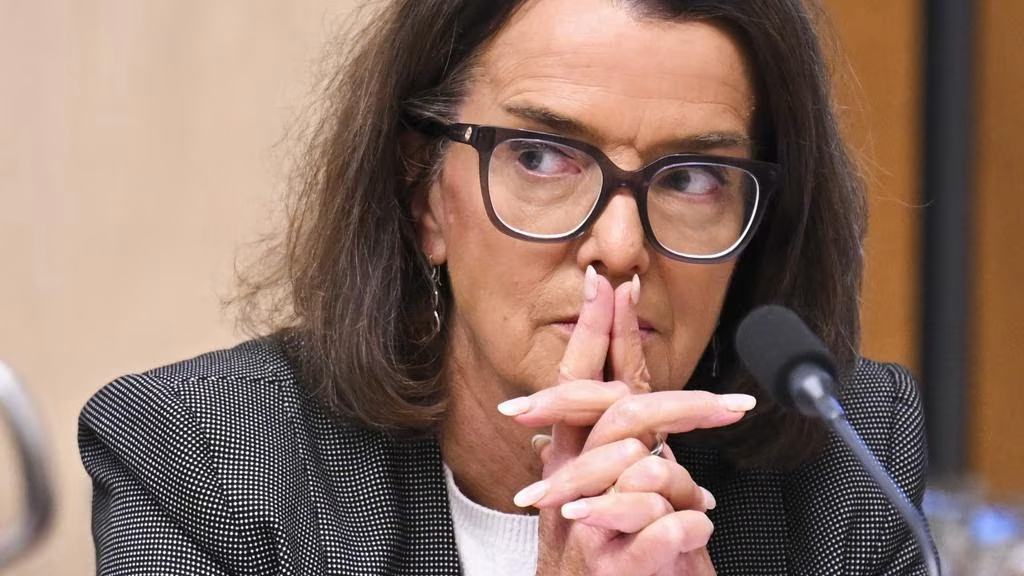
Her comments were echoed by Shadow Minister for Health and Aged Care Anne Ruston, who also criticised delays in access to care.
“To have a situation where 200,000 older Australians are either waiting for the care they’ve been assessed as needing, or waiting for an assessment means that 200,000 older Australians whose health conditions are deteriorating while they’re waiting to get care,” she said.
“Only 129 of 100,000 assessments were classified as urgent, which means instead of getting your care almost straight away, you’re waiting 10 to 12 months.
“If you’re 93 years old, you’ve got very, very high care needs to be told that you’ve got to wait 10 to 12 months, it’s an awful long time in the life of that person.”
The Coalition has called for greater human oversight of assessment and prioritisation processes, Senator Ruston blamed subsequent issues on the roll out of the new system, rather than the reform itself.
“I think the government needs to be big enough to admit that they have got a lot of this wrong,” she told ABC radio on Thursday.
“We need to make sure that we have a system where Australians are getting access to the care at a rate that is reasonable and affordable in terms of mainstream decisions.”
Ms Siegel-Brown urged policymakers to focus on prevention, early intervention and helping people remain at home for longer.
“The most important lesson here is that better outcomes do not come from bigger budgets,” Ms Siegel-Brown said.
“They come from spending the money more intelligently.”
Email: rebecca.cox@news.com.au