
Create better menus with Inspired Dining – a practical guide for aged care
The guide brings together nutrition guidance, menu-planning tools, food fortification tips, texture-modified meal support and flavour-packed recipes

Great food and beverage experiences can make a meaningful difference in aged care – supporting nutrition, dignity, choice and enjoyment at every meal. Delivering nourishing, consistent and appealing menus is becoming increasingly challenging for aged care, as cost pressures, compliance requirements and workforce constraints continue to grow.
Nestlé Professional can help support aged care teams with a diverse portfolio of food and beverage solutions, to create better menus that are practical to deliver, consistent in quality and enjoyable for residents.
To help you build better menus, Nestlé Professional in partnership with Nestlé Health Science have developed Inspired Dining, a new practical guide designed specifically for aged care foodservice teams. The guide brings together nutrition guidance, menu planning tools, food fortification tips, texture-modified meal support and flavour-packed recipes to help teams strengthen nutrition care while improving the dining experience.
Practical guide to Standard 6 – Food and Nutrition
The strengthened aged care quality standards ensure older people receive quality care that is safe, meets their needs and preferences and upholds their rights. There is an increased focus on food and nutrition with the Strengthened Aged Care Quality Standards. Standard 6 – Food and Nutrition, includes outcomes that must be met.
Partner with older people to provide a quality food, drink and dining experience.
Partnering with older people means actively seeking and using their feedback to shape the food, drink and dining experience. Feedback can be gathered through resident meetings, food focus groups, surveys, feedback boxes and one-to-one discussions.
The chef and/or cook should be involved in this process, and it may also be useful to include families where appropriate.
All feedback should be documented, along with how it has been considered and used in menu planning.
Assess and meet the nutritional needs and preferences of each older person.
Menu planning should reflect each resident’s nutrition, hydration and dining needs. Work closely with clinical teams to ensure assessment information is shared and used to guide menu choices.
- Document food waste to help monitor intake.
- Use food charts consistently across the team.
- Record useful detail, such as “vegetables eaten, meat left”, rather than “½ meal eaten”.
Provide access to nutritious food and drinks, with choice about what and when residents eat and drink.
Menus should offer nourishing, varied and practical choices across the day. Standard recipes, serve sizes and clear communication help support consistency, choice and resident satisfaction.
- Document and follow standard recipes, including yield.
- Use standard serve sizes and utensils.
- Include a daily protein option at breakfast, preferably hot.
- Offer three or more cereals, including a hot cereal made with fortified milk.
- Provide two hot lunch options and a nourishing light evening meal.
- Offer suitable alternatives with comparable protein to the main meal.
- Provide nourishing morning tea, afternoon tea and supper daily.
- Keep menus varied across protein, dish style, vegetables, colours, flavours and textures.
- Use at least a three-week menu cycle and update seasonally, at least twice per year.
- Make food and drink options clear and accessible throughout the day.
An Accredited Practising Dietitian (APD) should be involved when menus are changed and should complete an in-home menu and mealtime assessment at least annually.
Meet the dining experience needs and preferences of older people.
A positive dining experience supports enjoyment and intake. Consider presentation, aroma, temperature and the overall mealtime environment, especially for texture-modified meals.
- Set tables for meals and keep dining areas free from clutter.
- Use crockery where possible to create a homelike experience.
- Keep lighting comfortable, not too bright or too dull.
- Use pleasant background music and minimise noise.
- Avoid interrupting meals with medicine rounds or other tasks.
- Recognise resident preferences, traditions and special dates.
Nourishing menus
Practical guide to protein
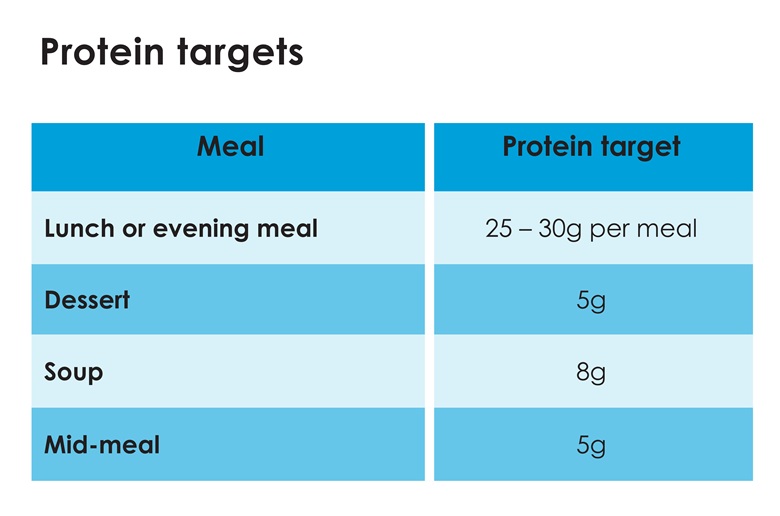
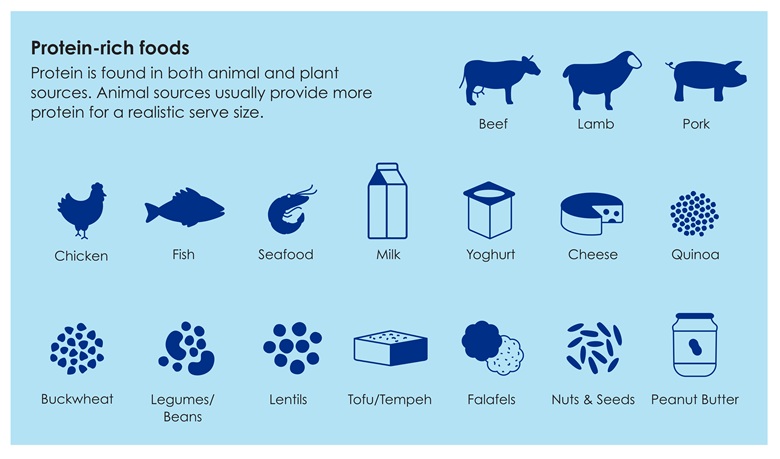
Protein supports muscle strength, mobility, the immune system and wound healing. Older people have lower appetites so they’re eating less but their needs are actually increased (even more so when they’re unwell). Menus need to provide enough protein at each meal and mid-meal.

Food fortification tips
Boost protein and dairy foods across the menu
- All soups should have meat &/or legumes &/or skim milk powder
- Offer nourishing dairy based drinks at all meals and mid-meals
- Use fortified milk wherever milk is used e.g. in tea / coffee / cereal / porridge / sauces / desserts
- Add skim milk powder into baking, sauces, mash and desserts
- Look for opportunities to add legume, nut or egg powder
- Add legumes and lentils to soups, casseroles, curries, salads, vegetarian patties
- Add cheese into meals e.g. mash, onto meals e.g. pasta, and in sauces, soups, baking and mid-meals
- If tolerated, include nuts as a snack and in cooking
- Offer nut spreads at breakfast and mid-meals
- Have yoghurt or custard pots available anytime
- Offer calcium rich milk-based desserts twice daily. These desserts can include one that is served with fruit salad or pudding e.g. ½ cup custard or yoghurt, or 100g ice-cream.
- Offer milk based drinks with all meals and mid-meals e.g. plain milk, flavoured milk, SUSTAGEN and MILO.
Hydration and fluids
Having enough to drink is important for many reasons. Symptoms of dehydration can be the same as illness and some medical conditions, so keeping older people well hydrated helps timely clinical management.
- Aim 1,500 – 2,000 ml each day
- Offer with each meal and mid-meal, keep jugs on tables, extra in hot weather, consider a hydration cart.
To support hydration in everyday care settings, Nestlé Professional offers a broad range of beverage solutions tailored to health and aged care. From automated NESCAFÉ coffee machines that enable quick, consistent end cup delivery to familiar favourites like MILO, NESCAFÉ and hot chocolate, all available in tin or sachet formats.

Inspired Dining: download your free guide today
Whether you are reviewing cycle menus, looking for simple ways to boost protein and energy, or working to support adherence to Australian Standard 6 (Food & Nutrition), Inspired Dining offers practical tools that can be applied in real aged care kitchens — without adding unnecessary complexity. Because menu planning does not need to be complicated. With the right guidance, trusted products and practical recipe inspiration, aged care teams can deliver balanced, varied and enjoyable menus that support resident wellbeing — one meal, snack and beverage at a time.
Email: rebecca.cox@news.com.au