
Research upends assumptions about why men don’t work in aged care
Many people are unaware of the skill, judgement, emotional labour and relationship-building required in frontline roles like aged care
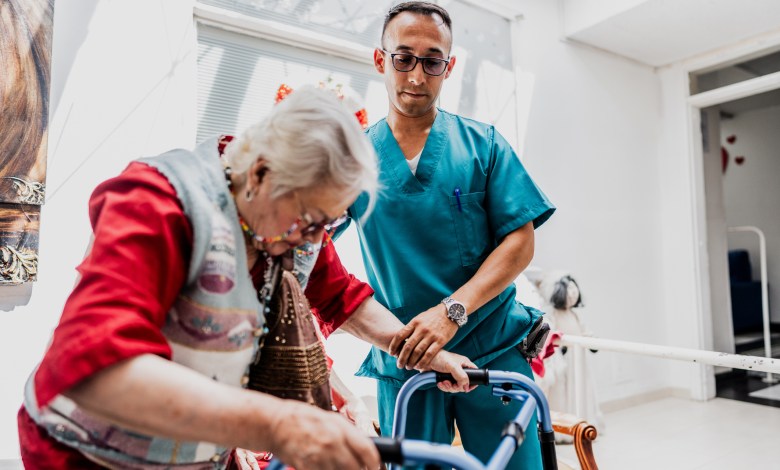
Low pay, insecure employment and limited understanding of what care work actually involves are the key reasons more men are not entering Australia’s aged care and disability support workforce, according to new research from Monash University.
The findings challenge a long-held assumption that men avoid care work because it conflicts with masculine identity, instead pointing to structural and economic barriers that make frontline care roles less attractive and less sustainable.
The study drew on focus groups and interviews with 41 men working in frontline aged care and disability support roles across Australia. Researchers found that concerns about masculinity were not a significant barrier to participation. Instead, participants consistently pointed to low and insecure pay, limited full-time work and poor public awareness of the profession.
Lead researcher Professor Steven Roberts said the findings revealed a mismatch between common assumptions and the reality experienced by male care workers.
“The men we spoke to were not grappling with care work as a threat to their masculinity. They were grappling with insecure hours, low wages, and a labour market still shaped by gendered assumptions about whose income is expected to support a household,” he said.
As shortages persist across the nation’s health, aged care and disability services, the study highlights that men currently make up just 20 per cent of Australia’s Health Care and Social Assistance workforce.
Researchers identified the enduring influence of the traditional breadwinner model as a major factor shaping men's decisions about care work. Participants described struggles securing enough hours to support themselves and their families, despite working in a sector facing workforce shortages.
“What our participants showed us is that this isn’t about men rejecting care work – it’s about the economics of the sector,” Professor Roberts said.
“When you can’t secure full-time hours or a liveable wage it becomes almost impossible to meet the financial expectations still placed on men to provide the main source of income.
“This isn’t a matter of identity discomfort; it’s a structural problem embedded in how care work is valued and funded.”
The study also found many men entered the sector with little understanding of what care work involved. Participants described care work as being widely misunderstood, with many people unaware of the skill, judgement, emotional labour and relationship-building required in frontline roles.
Researchers argue that improving wages and employment conditions alone is unlikely to fully address the gender imbalance. Instead, they say greater exposure to care careers through schools and community programs could play an important role in broadening participation.
“Most people only encounter care work when they need it, which means they rarely see the skill, judgement and complexity involved. If we want more men in care, we need to fix the conditions of care work – and we need to start earlier,” Professor Roberts said.
“Introducing young people to the realities and value of care work while they’re still in school could be one of the most effective ways to expand the future workforce.”
Email: rebecca.cox@news.com.au