
Senate backs call to scrap aged care assessment tool
The Crossbench and Coalition joined the Greens to back a Senate call for an aged care assessment overhaul
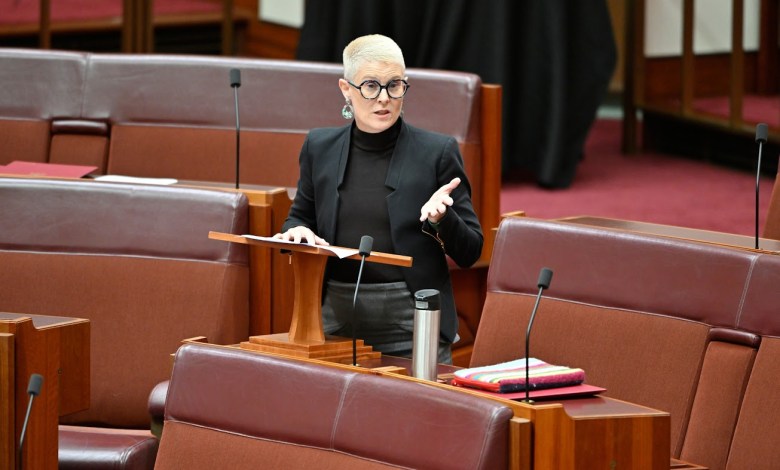
The Senate has backed a Greens motion calling on the federal government to abolish the Integrated Assessment Tool (IAT), intensifying pressure on one of the most controversial elements of Labor’s aged care reforms.
The motion, moved by Greens Older People spokesperson Senator Penny Allman-Payne, was agreed to after the Coalition and crossbench supported an earlier motion to suspend standing orders.
The Senate motion notes the IAT is “untested, structurally flawed and systematically under-assessing the care needs of older Australians” and calls on the government to abolish the tool, replace it with a clinician-designed assessment system and restore human override to the assessment process.
Senator Allman-Payne said the vote sent a clear message to the government.
“The writing is on the wall for Labor’s aged care assessment tool,” she said.
“It’s a friendless system that older people, carers and experts have been screaming about for months.
“It’s systematically under-assessing need and priority, denying care to thousands and leaving people with degenerative conditions desperately short of even the bare minimum funding they need.”
The vote follows a series of parliamentary challenges to the government’s aged care reforms. Last month, the Senate passed legislation co-sponsored by the Greens that would restore human override to assessment outcomes, although the measure was later rejected in the House of Representatives.
Sector concerns extend beyond parliament
The motion also comes amid growing scrutiny of the IAT following the ABC Four Corners’ investigation The Waiting Game, which examined concerns about how the system assesses older Australians seeking government-funded aged care support.
According to the program, the current system relies on a structured assessment process that ultimately feeds data into a classification mechanism used to determine support levels.
Consumer and sector organisations have stopped short of calling for the tool’s abolition but have also raised concerns about how it operates.
Council on the Aging Australia (COTA) chief executive Patricia Sparrow said the system needed stronger human judgement and oversight.
“Having an algorithm determine a person’s level of care, with limited opportunity for assessors or clinicians to intervene in the outcome, was always likely to create problems,” Ms Sparrow said.
She welcomed recent government changes designed to strengthen human oversight but said it remained critical to monitor whether those reforms addressed the issues being experienced by older Australians.
“The burden should not fall on older people to prove an assessment is wrong. The system itself must be able to identify and correct problems quickly,” she said.
Palliative Care Australia (PCA) also questioned whether the current assessment framework is accurately capturing complex needs.
“The Integrated Assessment Tool is designed to identify what support an older person needs, yet it does not specifically assess their palliative care needs,” said PCA national policy director Josh Fear.
“That needs to change. Assessors should be equipped to recognise palliative care needs early so they can inform a person’s care and support.”
The Coalition has also seized on growing criticism of the system. Earlier this month, Shadow Aged Care Minister Anne Ruston said evidence to a Senate inquiry showed older Australians, carers and advocates were facing lengthy waits, inadequate support and increasing uncertainty.
Government defends reform agenda
The government has defended the IAT, arguing it was introduced as part of broader reforms recommended by the Royal Commission into Aged Care Quality and Safety and was designed to improve consistency in assessment outcomes.
Speaking to ABC Radio Illawarra earlier this week, Aged Care Minister Sam Rae rejected comparisons between the assessment system and Robodebt.
“The new assessment system is delivering faster, more equitable and fairer outcomes for older people,” Mr Rae said.
He said around 250,000 assessments had been completed in the first half of 2026 and argued the tool formed part of a broader assessment process undertaken by qualified assessors.
“There’s a lot of misinformation around about the assessment system,” he said.
More recently, Health and Ageing Minister Mark Butler said the government would introduce an escalation pathway for people with particularly complex needs.
“It’s important to remember that assessment system was a clear recommendation of the Aged Care Royal Commission,” Mr Butler said.
“But we also said that we’d monitor the progress of that new tool since it began in November last year, so we will be putting in place that escalation pathway.”
While the Senate motion is not binding on the government, it adds to growing political and sector pressure on the assessment framework, just months after the launch of Support at Home. Whether Labor persists with the IAT, substantially revises it or ultimately replaces it is likely to remain a central issue in the aged care reform debate.
Email: rebecca.cox@news.com.au



In a recent Medium article (https://medium.com/@allennugent_9113/iat-in-the-hot-seat-6cc40d1309f7), I argue that the design and implementation of the IAT is in conflict with the Commonwealth’s own AI Ethics Framework. I’m hoping someone will pick up on this idea and use it as ammunition in the fight.