NSW Labor’s record $10b health budget ‘reflects the govt priorities’
It includes the biggest pay rise for nurses in a decade, 9,000 additional workers, service expansions and support for four new hospitals
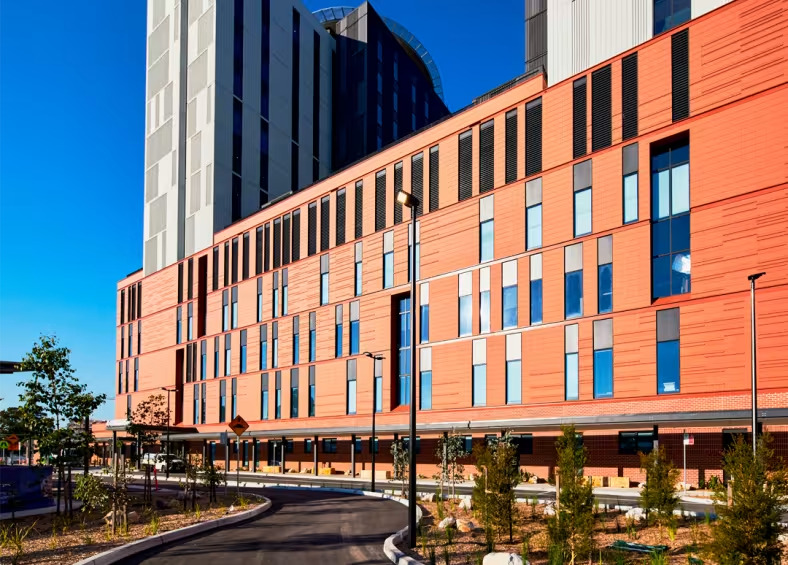
The NSW government has announced what it says is the largest increase to the health budget in the state’s history, unveiling a $10.3 billion package over four years to recruit thousands of health workers, expand services and fully staff new hospitals coming online across the state.
The government said the investment marks a decisive shift after a decade of wage caps and workforce shortages that have strained the public health system.
“A decade of Liberal and National wage suppression not only hurt individual workers, but it damaged the entire health system,” NSW Treasurer Daniel Mookhey said.
“Labor is rebuilding this essential service through better pay, more staff and more services.”
Mr Mookhey went on to say the record spend is underpinned by the biggest pay rise for nurses and midwives in more than a decade, with $2.9 billion allocated to boost wages and improve retention.
Under the new award, senior registered nurses will be more than $300 a week better off than they were under the former Coalition government’s wages cap, with that amount rising to more than $450 a week by the end of the agreement.
The Minns government said the funding will support the recruitment of 9,000 additional health workers, including nurses, paramedics, allied health staff and hospital support roles.
Since 2023, nurse retention in NSW has risen to 93.7 per cent, and more than 5,300 full‑time equivalent nurses have been added to the system, including nearly 1000 through the rollout of Safe Staffing Levels.
The government has also recruited more than 740 paramedics, 1400 doctors and 1500 allied health workers since taking office.
Alongside workforce growth, the budget includes major service expansions. The government said the funding will support an extra 33,000 emergency department presentations each year, nearly 3000 additional planned surgeries, and around 16,000 more inpatient services, including emergency operations.
Renal dialysis capacity will increase by 11,000 sessions annually. The investment also includes more than 80 new beds, expanded emergency and outpatient treatment spaces, new operating theatres, and additional maternity, birthing and cancer-care capacity.
A significant portion of the funding is earmarked for the opening and operation of four major hospital developments – John Hunter, Shoalhaven, Nepean and Eurobodalla – ensuring they are fully staffed when they begin treating patients.
Regional communities will also see expanded services at Milton‑Ulladulla, Wollongong, Cowra, Blayney, Moree, Muswellbrook and Finley, as well as new Emergency Department Short Stay Unit beds in Ballina and Grafton.
Health Minister Ryan Park said the record investment is designed to secure the future of the state’s health system as demand rises with an ageing population and more complex patient needs.
“We are delivering more staff and more services, giving nurses their largest pay rise in more than a decade – all without privatisation,” he said.
“This health funding boost, the largest by far in the history of our state, reflects the enormity of this challenge and the priorities of this government.”
The government said recent reforms – including expanded virtual care, urgent care services and Hospital in the Home programs – have already reduced pressure on emergency departments by diverting non‑urgent patients to alternative pathways. The new funding will build on those gains while ensuring hospitals opening in the coming years are properly staffed and equipped to meet rising demand, it said.
Email: rebecca.cox@news.com.au