
‘Tip of the iceberg’: Elder abuse under-recognised in Australian hospitals
Researchers have identified hospitals and emergency departments as key points of contact for older people who may be injured, distressed or unsafe
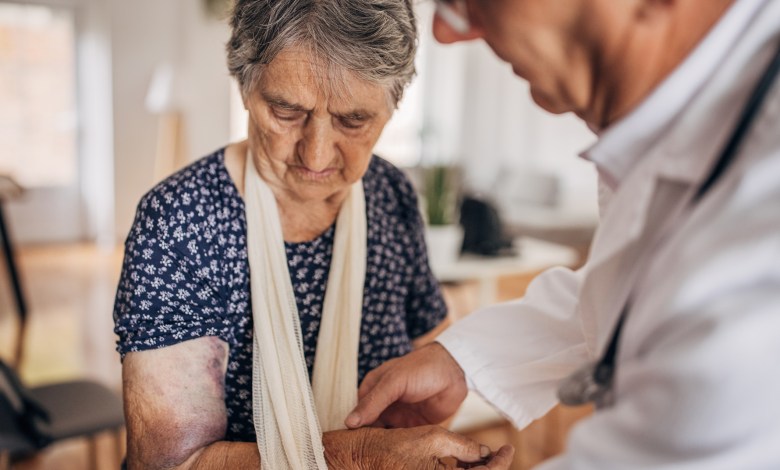
A national study has found that elder abuse is being significantly under‑recognised in Australian hospitals and emergency departments, with researchers warning that the health system may be missing thousands of cases each year.
Published in the Medical Journal of Australia, the study examined linked hospital and aged care data from 965,986 older Australians across four states between 2010 and 2019. Only 580 people, or 0.06 per cent, had elder abuse recorded during a hospital admission or emergency department presentation.
This is far below national survey estimates, which suggest two to 15 per cent of older Australians experience abuse each year.
Associate Professor Stephanie Harrison, who led the study through the Registry of Senior Australians (ROSA) Research Centre at the South Australian Health and Medical Research Institute (SAHMRI) and Flinders University, said the findings reveal a major gap in detection.
“What we are seeing in hospital data may only be the tip of the iceberg,” she said.
“Elder abuse is often hidden, and it is likely that many cases are not identified or documented when older people present to emergency departments or are admitted to hospital.”
“These figures likely represent only the most severe cases that come to clinical attention.”
Of the cases identified, physical abuse and neglect or abandonment were the most commonly coded forms of harm.
Smaller numbers of cases involved psychological abuse, sexual abuse or unspecified maltreatment. When domestic violence codes were included, the total number of affected individuals rose to 778, or 0.08 per cent.
The study found slightly higher rates of recorded abuse among people living with dementia, those from socioeconomically disadvantaged areas, and older people who speak a language other than English.
Researchers say these patterns reflect known risk factors but also highlight how many cases may be going undetected.
Why abuse is missed
The research notes that elder abuse is difficult to identify in acute-care environments. Older people may be reluctant to disclose harm due to fear, shame or dependence on the perpetrator.
Clinicians may also lack training or confidence in recognising signs of abuse, particularly when injuries or distress could be attributed to age, frailty or illness.
Associate Professor Harrison said these barriers contribute to under‑reporting.
“Stigma, fear, lack of awareness and the complexity of recognising abuse, particularly when it involves family members, can make it difficult for clinicians to identify and record these cases,” she said.
International evidence shows similar patterns. Hospital‑based elder abuse detection rates in the United States are also extremely low, despite much higher prevalence in community surveys.
Researchers have identified hospitals and emergency departments as key points of contact for older people who may be injured, distressed or unsafe. Improving detection in these settings could help identify abuse earlier and, importantly, prevent further harm.
The study calls for stronger clinical guidelines, routine screening, clearer coding standards and better staff training to support clinicians to recognise and document this abuse.
It also recommends better integration of hospital data with aged care reporting systems, including the Serious Incident Response Scheme, to build a more accurate national picture.
A national plan
The findings come as the federal government begins rolling out its 10‑year National Plan to End the Abuse and Mistreatment of Older People, which aims to strengthen prevention, detection and responses across health, aged care and community services.
ROSA researchers said the new plan, combined with improved hospital reporting, has the potential to help Australia better understand the scale of elder abuse and develop more effective strategies to protect older people.
“Elder abuse is associated with serious health consequences, including injury, hospitalisation and long‑term psychological distress,” Associate Professor Harrison said.
“Hospitals and emergency departments are important opportunities to recognise and respond to abuse, and improving detection is critical to keeping older people safe.”
Email: rebecca.cox@news.com.au
A 10 year plan won’t help abuse happening now, we’ll all be dead by then. All society need to be educated about personality disorders, how to recognise the behaviour patterns and the sly clever way psychological damage is done.
Yes, victims are afraid to speak up because they know they won’t be believed. My abuser could charm the grasshoppers out of the ground, could charm the people running Elder Abuse Australia too!
ABC Insight when they had Jenny Brockie was the best attempt I’ve heard. There are plenty of books available and forums online, they are the only support I’ve found, who understand not only how
Much damage is done, and how incredibly sneaky and clever the perpetrators are. Still that doesn’t stop the abuse. Disordered abusers can’t stop, that’s why education is desperately needed, starting in schools to help with bullying, and in the general community, so you don’t get sneered and laughed at if you try to get help. The abusers are trying hard to present their victim as mentally diminished, so when you attempt to explain the outrageous things they’re doing to control you, you won’t be believed because there is little knowledge in the general community. I fear that many people my age are not as strong as I am and have allowed themselves to become dependent on a relative or carer and are either afraid to speak up, or don’t know where to turn. These types of abusers, turn everyone against you, isolate and take away your confidence.
From all I’ve learnt I think this abuse starts in childhood and will continue all the abuser’s life. I try to bring it up out in public, occasionally someone will open up and tell you a similar story, we are both grateful to meet someone else who actually understands. It’s anyone of any age who can be targeted, and it can last a lifetime, and yes, they can destroy you! The fragile elderly are easy marks, as are children.
If we mention words such as ‘ narcissist ‘, we are mostly ridiculed, I will continue to say that until it becomes more widely known, and the damage they do is recognised, for my own sake and so many worldwide who suffer in silence.
As above