
Ethical gaps, poor design and workforce strain holding aged care tech back
A new study examines how digital tools can support older people while still protecting dignity, autonomy and human connection

Academics have warned that aged care technologies risk failing older Australians unless they are designed and implemented with far greater attention to ethics, co‑design and workforce capability.
The research, Beyond innovation: Reimagining inclusive and ethical technologies for ageing populations, argues that while smart technologies – such as home sensors, wearables and artificial intelligence – are often promoted as solutions for the independence and safety of older people, their real‑world adoption depends on human relationships, trust and the environments in which care takes place.
Led by Flinders University’s Caring Futures Institute, the study examines how digital tools can support older people while still protecting dignity, autonomy and human connection.
“The conversation about ageing and technology needs to move beyond the idea that new devices automatically lead to better care,” lead author Dr Claire Gough said.

“Technology is often presented as a quick fix for the challenges of ageing, but it’s never just about the device. It’s about people, relationships, values and the environments older people live in.”
The research highlights that while technologies such as falls‑detection sensors, medication reminders and virtual assistants can help older people remain at home longer, uptake remains lower than expected.
Many older adults express concerns about privacy, loss of control and the feeling of being constantly monitored.
“If technology feels intrusive or makes someone feel less respected, it’s unlikely to be welcomed, no matter how advanced it is,” Dr Gough noted.
The study also emphasises that decisions about technology are rarely made by older people alone. Families, carers and health professionals influence what is adopted and how it is used. If a device is difficult to operate, adds to workloads or feels ethically uncomfortable, care workers may hesitate to use it.
“Care doesn’t happen in isolation,” Dr Gough said.
“If we don’t design technology that fits into real lives and real care settings, it simply won’t be used as intended.”
The authors argue that technology adoption is shaped by the lived experience of its users.
They warn that promising pilot programs often fail to scale because procurement, governance, workforce capacity and implementation support are underestimated. Even as future generations of older people become more digitally literate, human factors such as trust, dignity and relational care will remain decisive.
The commentary concludes that the future of ageing “is not just a technical challenge, it’s a human one,” calling for co‑design with older adults, investment in implementation science and policies that prioritise dignity, autonomy and equity.
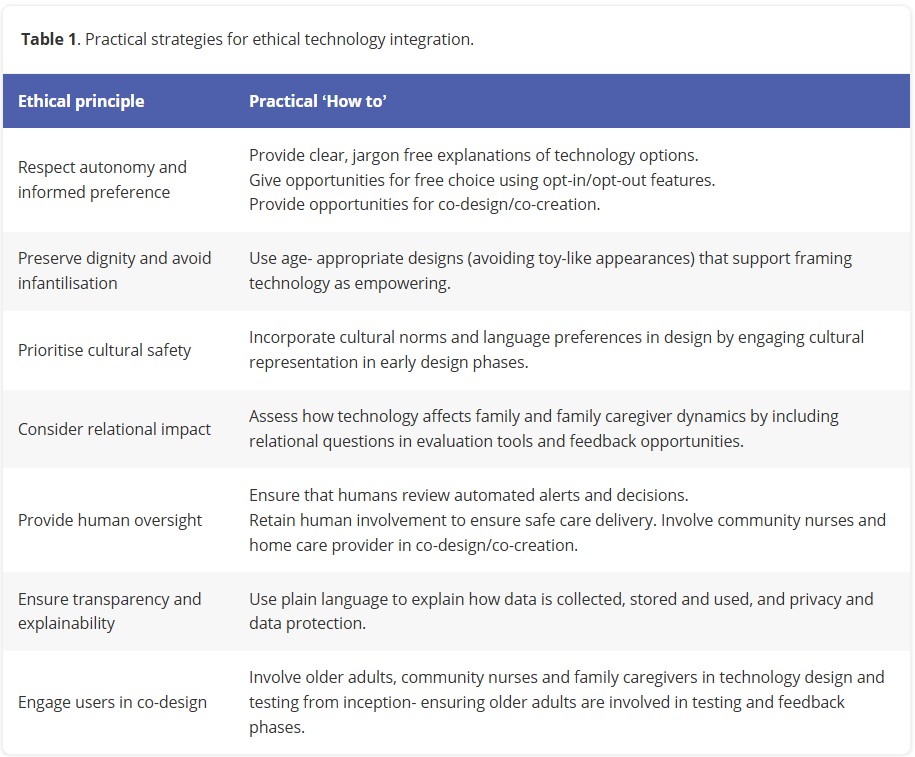
The authors say that nurses will play a pivotal role in ensuring technology enhances rather than replaces human connection by advocating for transparency, cultural safety and relational care.
“Technology should never take the place of human connection,” Dr Gough said.
“When it’s done well, it actually supports care workers to spend more meaningful time with the people they care for.”
Email: rebecca.cox@news.com.au