
WA expands transition beds, as aged care capacity crisis deepens
A grim picture of aged care is emerging in WA as it recorded its first decline in bed numbers in more than a decade with occupancy at 95 per cent
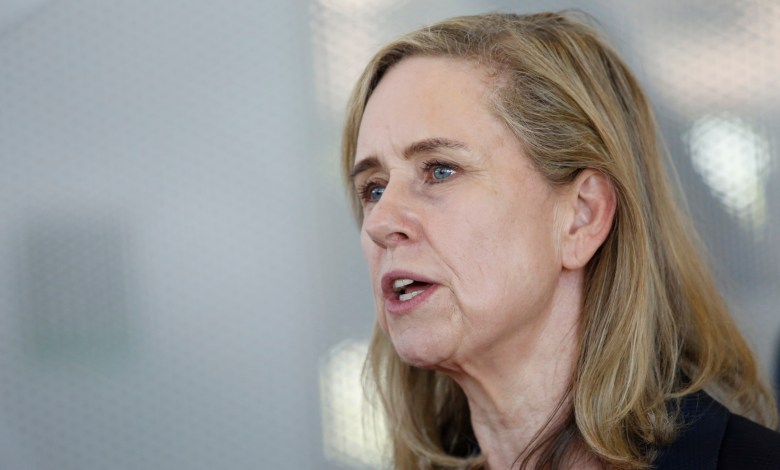
Western Australia’s aged care sector is facing a significant and time‑critical shortfall in residential aged care capacity, according to an analysis delivered to the state government in March, but only publicly released this week.
The Supply and Demand Analysis of Residential Aged Care in WA, prepared by EY‑Parthenon for the WA Department of Health, warns that the state’s residential aged care (RAC) system is operating under “sustained capacity pressure,” with demand rising sharply while new supply has stalled.
The report’s release coincides with the state government announcing an additional 59 beds under its Time to Think program – a short‑stay model designed to support older people who are medically ready for discharge but unable to immediately secure long‑term aged care. The expansion brings the program to 146 beds across Duncraig, Bull Creek, Camillo and Mosman Park.
WA Aged Care and Seniors Minister Simone McGurk said the additional beds would give families “time, space and assistance” to make longer‑term decisions.
“By working closely with aged care providers and the Commonwealth, we are strengthening aged care pathways and tailored support for older Western Australians,” she said.
However, while the Time to Think expansion may provide immediate relief for the state’s hospitals, transitional beds do not address the underlying shortage of permanent residential aged care places.
The program’s 146 short‑stay beds is a small fraction of the up to 2,700 new permanent beds required by 2030.
The EY‑Parthenon analysis paints a stark picture of WA’s long‑term residential aged care capacity:
- Demand for RAC has grown 24 per cent over the past decade, reaching around 18,500 residents in FY25
- In 2025, WA has recorded its first decline in bed numbers in more than a decade
- Investment in aged care construction has fallen 75 per cent since 2019–20, driven by high construction costs, workforce shortages, policy uncertainty and limited access to capital
- Providers report occupancy levels above 95 per cent, the highest in the country
- Commonwealth data shows 92 per cent occupancy, but EY estimates more than 700 beds are offline due to workforce constraints, redevelopment or unsaleable room configurations.
The report concludes that WA’s RAC system is “operating at close to full capacity,” with acute shortages across Greater Perth.
With the number of Western Australians aged 75 and over forecast to grow by 47,000 people between 2026 and 2030, the report projects RAC demand will increase four to five per cent annually through to 2040.
In this scenario, WA will require 1,600 to 2,700 additional operational beds by 2030, the equivalent of 16 to 27 new facilities, requiring $1.0-$1.8 billion in capital investment to keep up with demand.
At an average construction cost of $650,000 per bed (up 47 per cent since 2020) the report warns that WA faces a “substantial and time‑critical shortfall,” noting that new facilities typically take four to five years to plan and build.
The analysis also highlights uncertainty around the impact of the Support at Home reforms, which may further delay residential care entry for some older people, complicating long‑term demand forecasting.
Email: rebecca.cox@news.com.au