Purposeful Engagement Is Part of Care
Southern Cross Care (NSW & ACT) and NeuronsVR therapy bring clinical governance, and personal purposeful living together for people living with dementia.
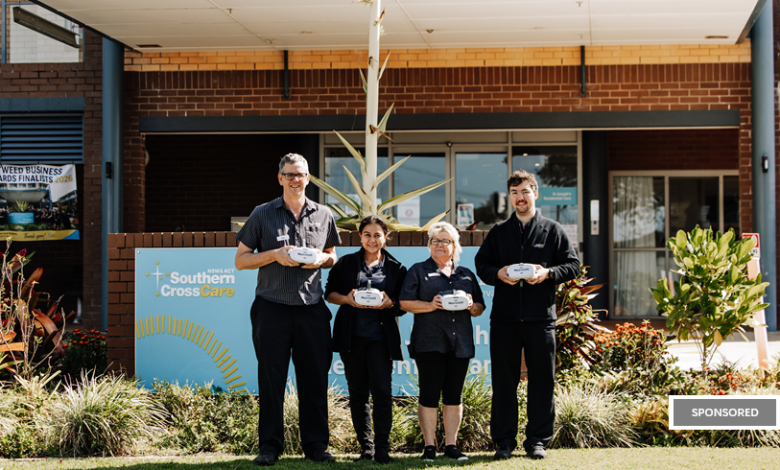
At Southern Cross Care (NSW & ACT), engagement is not simply the hour between lunch and afternoon tea. It is a core part of care: planned around the individual, supported by trained staff, observed in practice and reviewed for the difference it makes.
That distinction matters especially for people living with dementia. A full calendar does not necessarily mean a person is engaged. A busy room does not necessarily mean a person feels connected.
Meaningful engagement occurs when an experience is matched to the resident, delivered at the right time and used to support a clear care or wellbeing objective.
Southern Cross Care’s Model of Care & Engagement and its Purposeful Living Framework position engagement as a core component of quality care rather than an activity program.
Every interaction is guided by a person-centred relationship-based and evidence-informed approach that enables residents to live with purpose, dignity, connection and choice. Engagement is intentionally planned across the seven domains of holistic wellbeing and delivered collaboratively through multidisciplinary teams.
A model built around the resident
The Purposeful Living Framework places 'The Person and Their Purpose' at the centre of every decision. Life story, identity, strengths, culture, spirituality, preferences and relationships shape personalised experiences that promote meaningful engagement, independence, voice and choice, emotional wellbeing, reablement and a home-like environment.
This is a significant shift away from the idea that lifestyle programs sit beside care. Purposeful living is part of how care is experienced. The resident is not expected to fit the program; the program is expected to respond to the resident.
That may mean joining a larger group, taking part in a small interest-based session, continuing an independent leisure pursuit or receiving focused one-to-one support. The right format depends on the person, the day and the outcome being sought.
Why NeuronsVR therapy belongs within clinical governance
The rollout of NeuronsVR Therapy across Southern Cross Care’s homes in NSW and the ACT is being approached as more than the introduction of new equipment. It is a therapeutic engagement tool within an established care framework.
NeuronsVR aligns with the organisation’s Technology, Innovation & Inclusion enabler by strengthening cognitive stimulation, social connection and data-informed care planning. NeuronsVR supports human relationships, and is integrated into multidisciplinary care planning, governance processes and outcome measurement.
From a clinical governance perspective, the important questions are practical:
- Is the program appropriate for this resident?
- Is it on the resident’s care plan?
- What outcome is measured?
- What does the response tell staff about the resident’s preferences or unmet needs?
NeuronsVR delivers clinically developed therapy programs through virtual reality for aged care and people living with dementia. The therapy programs are designed to support outcomes such as relaxation, cognitive stimulation, conversation, reminiscence, movement and social interaction.
This is where clinical governance and purposeful living meet. Governance provides safeguards, accountability and review. Engagement practice provides relationship, and personalisation.
The quiet value of one-to-one care
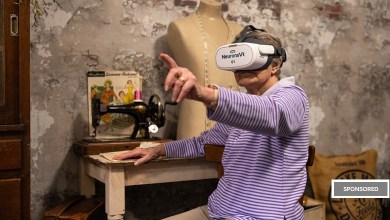
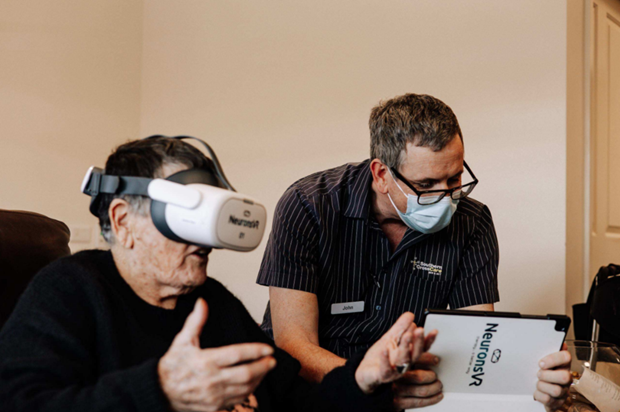
Some of the most important NeuronsVR sessions will not be large or highly visible. They happen one-to-one, with a staff member sitting beside a resident and paying close attention.
For a person who is withdrawn, anxious, fatigued or less able to participate in a group, a carefully selected NeuronsVR program can create a manageable point of connection. This makes the interaction relational rather than isolating.
One-to-one NeuronsVR sessions reflect the Model of Care's emphasis on relationship-based practice, spiritual and emotional care, and personalised daily moments of engagement. Staff observe responses, adapt the experience and use these insights to inform ongoing care planning.
When a NeuronsVR session becomes social
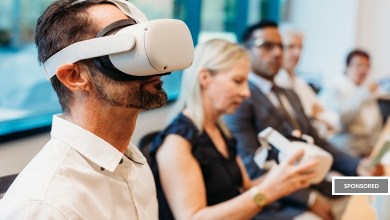
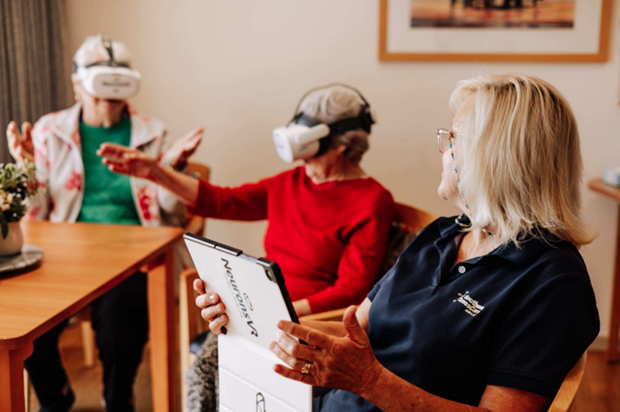
A NeuronsVR session can also become a shared experience. Group sessions extend beyond the equipment itself by strengthening relationships, belonging and community participation. Shared conversation and purposeful interaction contribute to emotional, intellectual and social wellbeing while supporting inclusion for every resident.
This matters because the objective is not to bring in equipment for the sake of appearing innovative, but rather to use NeuronsVR as a tool that supports better care and strengthened outcomes. The objective is to create participation. A successful group session may involve several residents using NeuronsVR therapy programs at different times, while others contribute through discussion, observation, music, movement or shared memories.
The energy of the staff is central. When several team members sit with residents, respond to what is happening and make the experience playful, this engagement becomes part of the social life of the home.
Fun is not outside the care plan
A clinical governance perspective does not remove fun from aged care. It gives fun a legitimate place within quality care.
Enjoyment can influence a person’s willingness to participate, communicate and connect with others. It can interrupt long periods of inactivity. It can give staff and residents something positive to share. For a person living with dementia, a moment of surprise or laughter may be brief, but it is still meaningful.
Southern Cross Care’s purpose is to enable older people to live life to the full. The Framework recognises enjoyment, purpose and meaningful occupation as legitimate clinical and wellbeing outcomes. Recreation, therapeutic engagement and positive emotion are intentionally embedded within holistic care to enhance quality of life.
Strengthening non-pharmacological interventions
NeuronsVR is a clinically developed, evidence-based, non-pharmacological tool available to multidisciplinary teams. Used alongside assessment and person-centred care planning, it supports therapeutic and cognitive stimulation, purposeful engagement and social connection while contributing to responsive, individualised dementia care.
When a resident is distressed, restless, disengaged or socially isolated, they may be communicating boredom, fear, discomfort, loneliness or a need for meaningful stimulation. A personalised NeuronsVR therapy session responds to that person’s unmet needs. It gives staff a practical way to understand what brings calm, interest or connection, and to carry that knowledge into future care.
Leadership that connects strategy to practice
The rollout has been led collaboratively by Clinical Governance, Engagement & Purposeful Living, Recreational Therapy Regional Advisors, Lifestyle teams and operational leaders. This reflects the Framework’s Integrated MDT Collaboration, Leadership, Workforce & Culture, Quality, Governance & Data, Technology & Innovation, and Community Partnership enablers, ensuring NeuronsVR is implemented safely, consistently and with measurable resident outcomes.
- Ceinwen Lawrence – Chief Clinical Governance Officer
- Peter Pargovski – Head of Engagement & Purposeful Living
- Julianne Walker – Recreational Therapy Regional Advisor
- Barbie Tsakmakis – Recreational Therapy Regional Advisor
Living life to the full, including with dementia
People living with dementia should not have to choose between safe care and an enjoyable life. They should be supported to experience both.
Southern Cross Care’s approach places engagement inside a much larger commitment: knowing the resident, understanding what matters to them, creating options and enabling staff to respond in a more personal way.
NeuronsVR Therapy is one of those options, providing measured everyday outcomes that matter inside a home: a resident who joins in, a person who becomes calmer, a conversation that would not otherwise have happened, or a group that finds itself laughing together.
That is the real opportunity NeuronsVR brings to dementia care.
Email: rebecca.cox@news.com.au