
One Nation migration cuts could ‘absolutely smash’ aged care sector
As Australia’s population ages, experts say migration will remain critical to meeting future demand for aged care workers

One Nation has unveiled plans to slash migration by more than 750,000 people over three years, a proposal critics claim would “kill the economy” and “devastate” Australia’s health, aged care and disability sectors.
The far-right party claims its “net-negative migration” policy would restore living standards by easing pressure on housing, infrastructure and public services, while bringing population growth back to what it considers a sustainable level.
“I know Australians are doing it tough,” party leader Pauline Hanson said.
“Families are competing with hundreds of people for rental accommodation. Patients are stuck in ambulances because there are not enough hospital beds. Young Australians are being locked out of home ownership while wages and infrastructure fail to keep up.”
The announcement swiftly united farmers, economists, universities, business groups and healthcare leaders in opposition.
The National Farmers’ Federation (NFF) warned the policy would hit regional Australia particularly hard, where temporary migrant workers play a critical role in the agricultural workforce.
“[They] help put food on tables, with backpackers alone filling roughly one in seven farm jobs nationally,” NFF chief Tony Mahar said.
“They also spend millions in regional communities and generally stay in hostels, caravan parks or purpose-built on-farm accommodation.
“They are not the cause of Australia’s housing crisis.”
The Australian Chamber of Commerce and Industry (ACCI) also criticised the proposal, arguing that Australia cannot afford large-scale cuts to migration while workforce shortages persist across multiple sectors.
“Many Australian businesses would be put at risk by major cuts to the migration program. Pubs, cafes, hotels and accommodation providers desperately need chefs. Aged care homes and hospitals are short of staff already. Farmers and resources sector businesses continue to face persistent workforce shortages,” ACCI chief Andrew McKellar said.
“Housing projects are being held up, while others remain unviable because of workforce and skills shortages.
“Education is an important export industry for Australia. From universities to training colleges across the country, Australia has built a global reputation for excellence, and we should not allow that to be traded away in a race to the bottom on migration.”
Under the policy, One Nation would primarily target international students and graduate visa holders, while “substantially” restricting the ability of students, graduates and skilled migrants to sponsor family members and dependants. The party has also pledged to end so-called “visa hopping”, where people move between temporary visas to extend their stay in Australia.
The party said it would also seek to increase departure rates and remove people living in Australia unlawfully. While the exact number of these people is uncertain, the Department of Home Affairs estimated there were just over 77,000 unlawful non-citizens in Australia as of June 30 2025.
Universities Australia (UA) chief Luke Sheehy said One Nation, Labor and the Coalition were engaged in a “political race to the bottom” on international students.
“You can’t take skills, jobs and billions of dollars of economic activity out of the country and pretend there will be no consequences,” he said.
“International education is one of Australia’s biggest exports. It supports jobs across the economy, helps build the skilled workforce we desperately need and strengthens our relationships around the world.
“It also helps keep our universities going.”
Aged care workforce fallout
The proposal has drawn particular concern from aged care and health leaders, who argue migration remains essential to meeting workforce demand now and into the future.
According to the 2024 Aged Care Worker Survey, 43 per cent of workers providing direct care to older Australians were born overseas. Government data from 2023 also estimated that 17 per cent of aged care nurses and personal care workers held temporary visas.
Health Minister Mark Butler said the proposal would have significant consequences for industries already facing labour shortages.
“This would absolutely smash industries like construction that rely very heavily on migrant workers but also devastate health and aged care and disability sectors that particularly rely upon migrant workers, especially in rural communities where it’s very difficult to find Australian-trained doctors,” he told Today.
“[The government has] got Covid and post-Covid migration levels down by about 50 per cent. We want to get them down more, but this is a careful balancing act between the capacity of the country to absorb migration numbers and the needs of our economy, particularly those sectors like construction, health, aged care and disability that rely so heavily on migrant workers at a time when we have very low unemployment.”
The Committee for Economic Development of Australia’s (CEDA) 2025 Duty of Care report estimated Australia would require an additional 400,000 aged care workers by 2050, largely due to population ageing. The report recommended urgently introducing an essential skills visa for aged care occupations in recognition of ongoing workforce shortages.
“We need to pull all levers to grow the care workforce, including a streamlined migration pathway,” CEDA chief Melinda Cilento said when the report was released.
“Migration must complement, not replace, efforts to build the Australian aged care workforce through better pay, conditions and training.
“Providers need to increase training of both new and existing staff and invest in new technology and innovation.
“Given the magnitude of the challenge, however, the Australian workforce alone will not be nearly enough to reverse the shortage.”
Compounding the issue, the aged care workforce itself is ageing alongside the population it supports.
The number of Australians aged over 80 is expected to grow by more than 300,000 over the next four years, while the aged care workforce has an average age of 43, increasing the risk of experienced workers retiring just as demand for care accelerates.

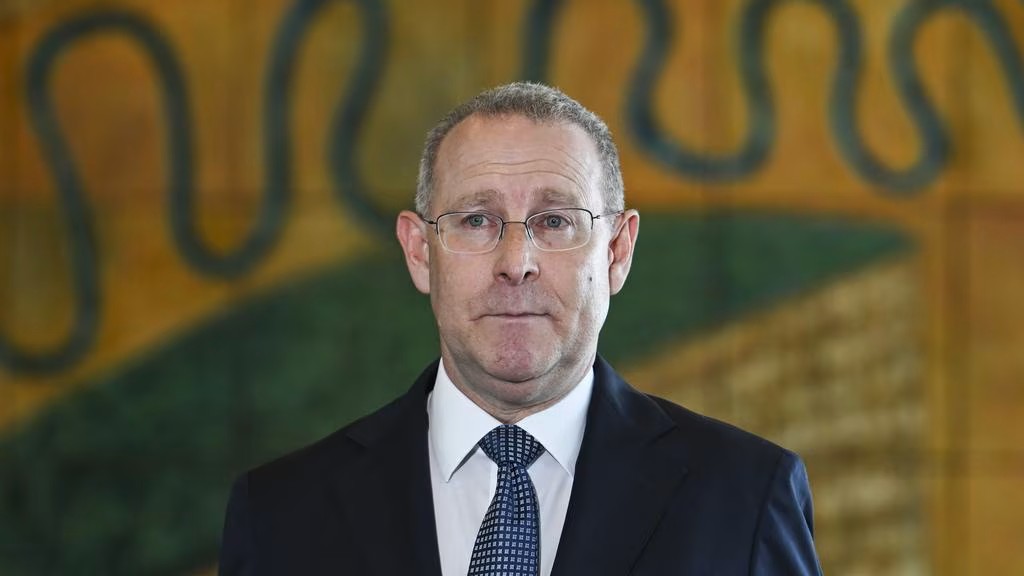
Image: NewsWire/Martin Ollman.
Hanson doubles down
Despite criticism, Senator Hanson has rejected claims the policy would damage economic growth, saying she does not “trust these economists”.
Speaking to News24 on Tuesday, she described the proposal as the “will of the people” and said she would be willing to submit the policy to the Parliamentary Budget Office for independent assessment.
“No problem with it,” she said.
“But did they get it right with the Snowy 2.0 scheme? Did they get it right with the NBN? You know, all these things … they’ve all budgeted for this and it’s always been a blowout as well.”
When pressed on whether the policy could push Australia into recession, Senator Hanson dismissed the suggestion.
“I don’t believe so,” she said.
“This is what people have been screaming out for many, many years to address the mass migration that we’ve had imposed on us as a nation. What I’m doing is implementing the will of the people. They want to cut the mass migration, and we’ve put out a comprehensive policy.”
Immigration minister Tony Burke is addressing the National Press Club today and will outline the government’s migration approach in his speech, The Work of Managing the Migration Program: Who Arrives, Who Stays, Who Leaves.
Email: rebecca.cox@news.com.au