Federal gov’t announces $67.7m for dementia and ageing research
The funding aims to strengthen Australia’s research pipeline and retain talent in fields critical to ageing, dementia and chronic disease
The Federal government has announced $67.7 million in new research funding to accelerate dementia prevention, improve healthy ageing and support emerging researchers, amid warnings that dementia will affect 850,000 Australians by 2058 without stronger national action.
The package includes $22.9 million for dementia and ageing research and $44.8 million for early‑ and mid‑career researchers, delivered through the Medical Research Future Fund (MRFF). Funding is being channelled through the Dementia, Ageing and Aged Care Mission, which aims to help older Australians maintain health, live independently for longer and access high‑quality care.
“Dementia is the leading cause of death in Australia – making action more important than ever. Research is key. Dementia is not a normal part of ageing and up to 45 per cent of cases globally can be avoided or delayed through 14 modifiable risk factors,” Minister for Health and Aged Care Mark Butler said.
“The funding for these projects will enable our best and brightest researchers in this field to make a real difference for people living with or at risk of dementia.”
“Every Australian deserves to age with dignity and in good health. The Albanese government is investing in the crucial research needed to make a difference in the lives of older Australians at risk,” Minister for Aged Care and Seniors Sam Rae added.
“This builds on our generational aged care reforms, including this Budget’s investment to deliver 20 new Specialist Dementia Care units and expand the Hospital to Aged Care Dementia Support Program.”
Targeting prevention, early intervention and equity
Eight projects have been funded under the 2025 Dementia, Ageing and Aged Care Grant Opportunity. These include $3 million for the Maintain Your Brain (MYB+) program, led by 2026 Senior Australian of the Year Professor Henry Brodaty AO at the University of NSW, and $900,000 for Dementia Friends Unite, a culturally tailored community‑led dementia education program led by Dr Diana Karamacoska at Western Sydney University.
The MYB+ project builds on earlier findings that online personalised coaching can reduce dementia risk and improve cognition. Researchers describe the expanded program as the “slip, slop slap of brain health”, aiming to reach Australians aged 45–80, particularly in rural and remote areas.
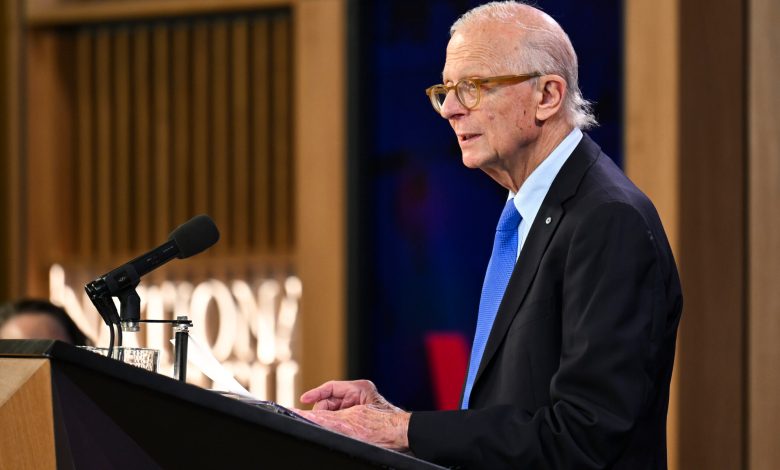
Professor Brodaty told the National Press Club last year that delaying dementia onset by even one year would have profound economic and social benefits.
“Imagine what the return on investment would be if Australia did this,” he said.
He warned that dementia costs Australia $18 billion annually, projected to rise to $37 billion within 25 years, and argued that prevention must become a national priority.
“We need the slip, slop, slap of brain health, now,” he said.
The MRFF’s Dementia, Ageing and Aged Care Mission is investing $185 million to support research that improves quality of life for older Australians. The latest grants focus on:
- reducing inequities in dementia prevention for Aboriginal and Torres Strait Islander peoples, rural and remote communities, and culturally and linguistically diverse populations
- improving implementation of best‑practice care across aged‑care settings
- understanding barriers and enablers to high‑quality care delivery
- extending healthy, active years of life through targeted interventions.
Professor Brodaty said dementia prevention must become a national priority on par with cancer and heart disease.
“Funding for dementia has lagged behind cancer and heart disease, even though it contributes more to disease burden,” he said.
“When it makes sense economically, as well as personally to people, then why not do it?”
The Mission is administered by the NHMRC on behalf of the Department of Health, Disability and Ageing.
A separate $44.8 million MRFF grant round will support early‑ and mid‑career researchers to address major health challenges for priority populations, lead large‑scale interdisciplinary research and translate research into new health policies and practice.
Email: rebecca.cox@news.com.au